2026 is the National Year of Reading!

The UK government (Department for Education), together with the National Literacy Trust, launched 2026 as a National Year of Reading to help more people of all ages rediscover the joy of reading.
This initiative is part of the wider Plan for Change to boost literacy, especially following a major decline in reading for pleasure. The theme for the year is ‘Go All In”!

To find out more follow the link: Families | National Year of Reading 2026 | Go All In

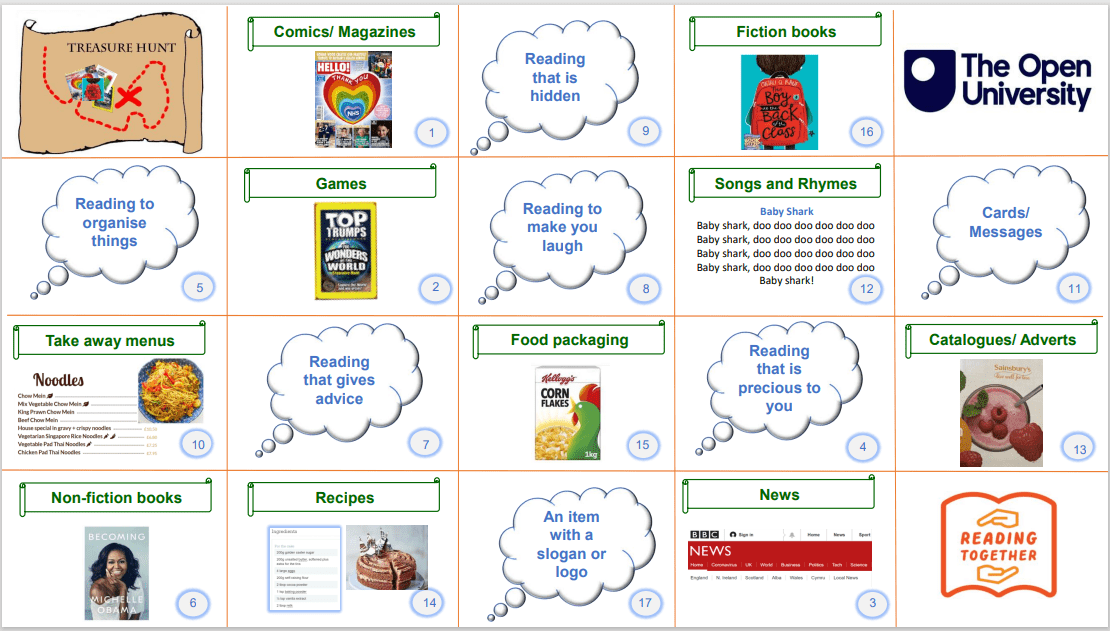
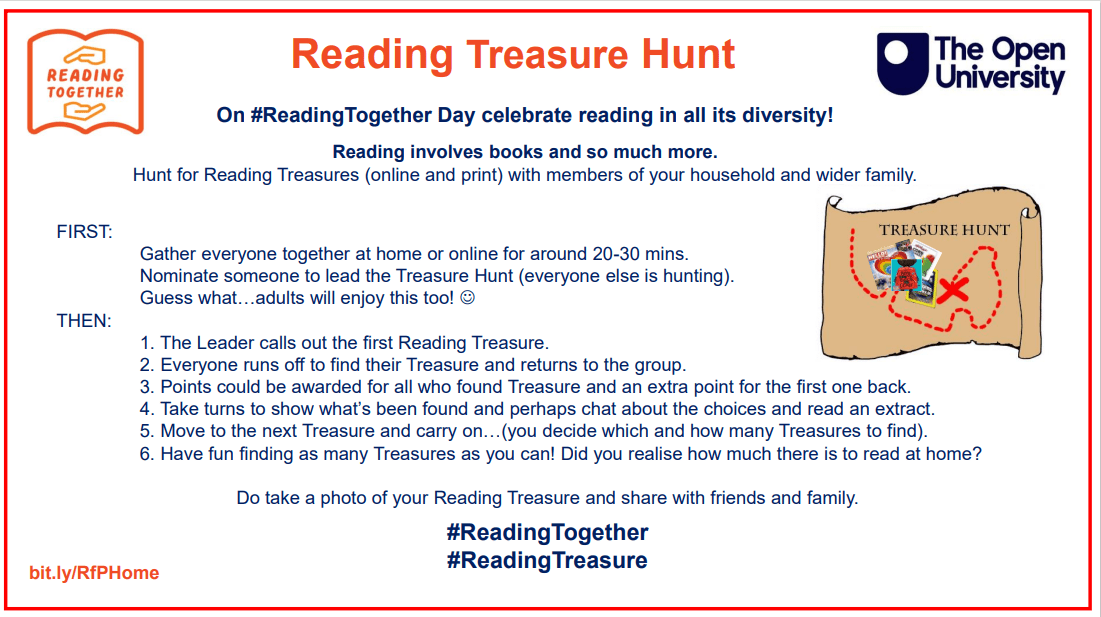
Reading for pleasure involves books and so much more!  Try The Open University  Reading Together Treasure Hunt at home with your family and friends. Together, you’ll become reading detectives – hunting out advertising, messages, comics, reading that makes you laugh and much more. You may well be surprised how much reading surrounds us everyday!

Reading Together Treasure Hunt – activity – Reading for Pleasure
Reading events coming up…

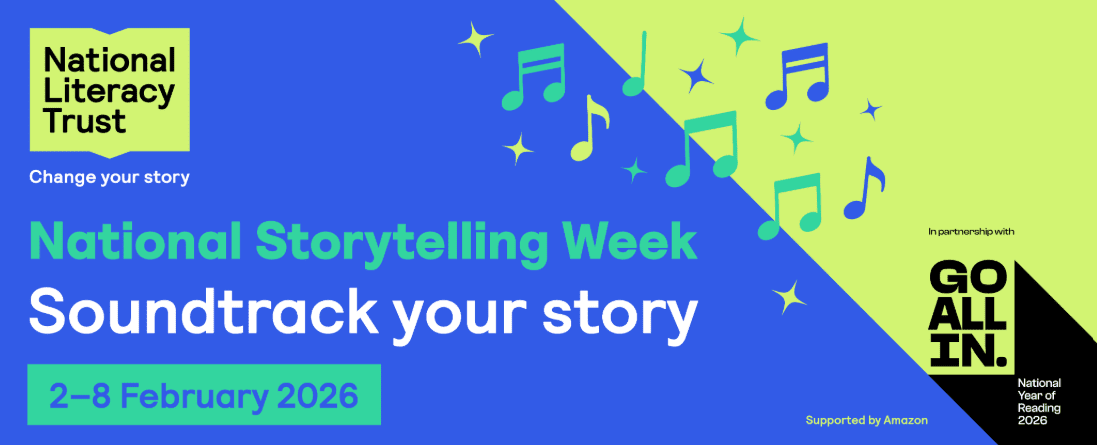
National Story Telling Week

Monday 2nd February- Friday 6th February-

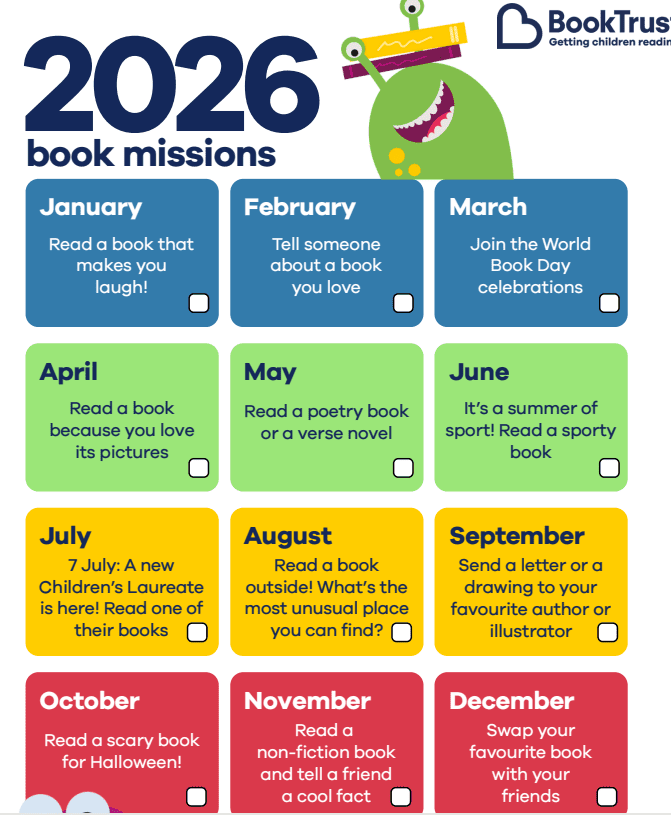
  • The Book Trust 2026 Book Mission — a monthly, book‑themed challenge for everyone to enjoy throughout the year. We’ll also be inviting parents to join us for a story during National Storytelling Week in February (see the latest bulletin for details).
  • Publisher visit to KS2 on Friday 6th February- The children will have a chance to ask questions about what it is like to be a publisher. They will also learn more about the power publishing wonderful books!

World Book Day 

Friday 6th March 

World Book Day About Us

The Masked Reader brings stories to life by disguising the identity of the reader and encouraging children to guess who is reading the book. This fun mystery adds excitement to reading and helps spark curiosity and engagement in every listener. Children will hear about new books and then have the opportunity to read them in school after the event!

Summer Reading Challenge -Story  Garden

Welcome to a fantastic free reading challenge.

Join in 21 June – 30 September!

You can take part in person at your local library. The library will give you a special sticker poster and other special incentives, and help you find books to read for your Challenge.

Find out more at: https://summerreadingchallenge.org.uk/join-in

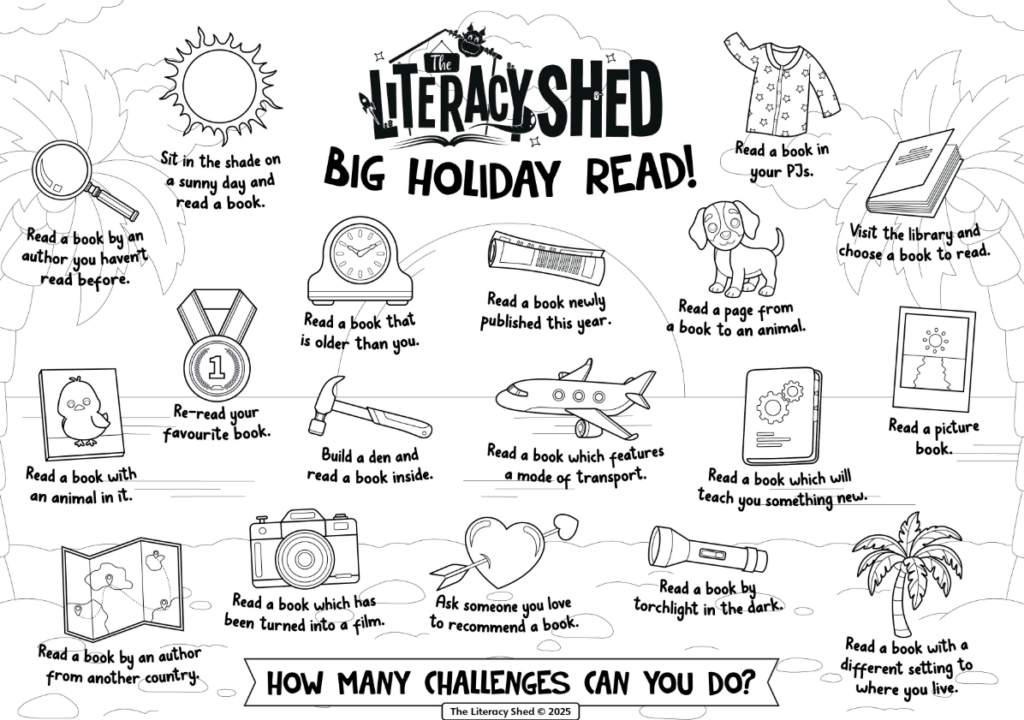
The Literacy Shed Reading Challenge 

Hints on Helping with Reading at Home

As a parent, you  play an important role in helping your child learn to read. Research shows that children who are helped at home make better progression school. Reading with your child can be fun and very rewarding. It also shows that you value his/her efforts. If children enjoy reading, it will benefit their whole education. They are also more likely to carry on reading as adults.

Choosing what to Read

Choose any books that appeal to your child, for example, stories or information books on hobbies/interests such as football or animals. Vary your reading together. It doesn’t have to be school books. Newspapers, magazines, recipes, games instructions can be read together and still be part of the process of learning to read with enjoyment.  We hope that you will also borrow books from the school library and from the local library to read together.  Your children may keep choosing the same book because it is a favourite. This is all part of learning to read.Children enjoy being read to even when they are fluent readers.

How can I help?

  • Find a quiet, relaxing place away from distractions such as TV
  • Sit comfortably in good light and talk to your child about their book
  • Read for about 10 minutes; a regular short time of quality is better than a long session which happens only occasionally
  • Ask why they have chosen the book
  • Talk about the cover and title and what the story might be about
  • Ask them to tell you who wrote the book or point to the author
  • Look at the pictures and ask them to tell you where the story takes place
  • Ask who they can see in the pictures (especially in simple caption books)
  • Try to be supportive and positive during the reading time
  • Encourage your children to look closely at the print
  • Read the first page or two together until your child is ready to continue alone
  • Encourage your child to point to each word as they read aloud Where possible wait for your child to decode words
  • Encourage the use of clues such as the look/sound of the letters, what would make sense and the illustrations
  • Do not sound out words which are not phonetic e.g “because”
  • When a mistake is self-corrected or a previously unknown word is recognised, praise highly
  • Encourage expressive reading by drawing attention to punctuation
  • Help understanding by talking about the story or text – the setting, the plot, the characters
  • Discuss the kind of people the characters are and the way they behave
  • Talk about the kind of story it is (adventure, fantasy, science fiction, myth…)
  • Encourage your child to refer to words and passages in the text to justify opinions
  • If your child is finding a book difficult, help out by reading it together

If they get stuck on a word, you could:

Let them read on, so they can work out the word themselves from the context point to a picture if it will help them guess the meaning, give them the first or last sounds to help them read along with them then pause, prompt, praise if they get it righto read the word for them (especially if it is a Proper Name). When they are confident with sounds, let them sound out unknown words – break longer words down in to syllables

Remember – Practice, with praise, makes perfect.

Please remember that the purpose of the ‘Reading Record’ book is to give your child’s class teacher feedback on how well your child is reading at home. If you have any concerns about your child’s reading please contact the class teacher by letter or in person. A bank of helpful phrases to use can be found below when reading with your child;

Reception & Key Stage One

  • Who is in the story?
  • Where is the story set?
  • Can you use the pictures to tell part of the story?
  • How do you think the story will end?
  • What will happen next?
  • Do you like the characters? Why?
  • What happens in the story?
  • What did the characters say? Why?
  • How did a character scare, upset or help another character?
  • Has this ever happened to you? How did you feel?
  • Did the story make you think of something that has happened to you or someone you know?

Lower Key Stage Two

  • Can you explain why you think a character did that in the story?
  • What does this word/phrase tell you about the character or setting?
  • What does the word ‘X’ tell us about ‘Y’?
  • Find two ways in which the writer tells you about an event/setting/character/theme?
  • Which words did you like the most? Why?
  •  In the story ‘X’ is mentioned a lot. Why?
  •  What other words/phrases could the writer have used?
  •  What do you think the writer meant by writing ‘X’?Which words do you think are the most important in this sentence/paragraph/page? Why?