

Please use the links and ensure you read them carefully so you complete the correct form:
This is the place to apply for a planned absence.
After you have read this page – click here to complete the:
APPLICATION FOR EXCEPTIONAL LEAVE OF ABSENCE DURING TERM TIME
Promoting good attendance and reducing absences, including persistent absences, is a key part of our role at Round Hill. The Government states that headteachers cannot grant any leave of absence for holidays during term time unless there are “exceptional circumstances”.
Parents requesting leave of absence due to “exceptional circumstances” should complete this form at least four weeks before the anticipated start date. Applications should be made before the leave is arranged, otherwise it may not be granted.
School will only authorise leave of absence during term time where there are exceptional circumstances.
School will NOT authorise holidays during term time.
The following are examples of reasons not deemed to be exceptional:
- My work does not allow me to take holidays during the school holiday periods
- Days overlapping with the beginning or end of term
- My child needs a holiday at quieter times due to their needs
- Our holiday has been gifted/arranged by others and we did not have a choice of dates
- My child has good or 100% attendance
- Availability of cheaper holidays and travel arrangements
- We booked the holiday before checking with the school
- Holiday dates of siblings/family at other schools are different
- Day trips/Birthday plans. It’s a special sporting fixture/show/event I want my child to attend
If a child has been reported as unwell and a holiday is suspected, school will report to the local authority for a penalty notice fine. School is expected to carry out home visits.
School will look at child’s overall attendance figures, when considering referring to the Local Authority for issuing of a fixed penalty notice.
Parents will receive a warning of penalty notice for unauthorised leave.
School will notify parents of penalty notice, should unauthorised leave of absence be taken (10 sessions over a 10- week rolling period).
The law on School Attendance and Right to a Full-Time Education
The law entitles every child of compulsory school age to a full-time education suitable to their age and any special educational need they may have. It is the legal responsibility of every parent to make sure their child receives that education either by attendance at a school or by education otherwise than at a school.
Where parents decide to have their child registered at school, they have an additional legal duty to ensure their child attends that school regularly. This means their child must attend every day that the school is open, except in a small number of allowable circumstances such as being too ill to attend or being given permission from the school for an absence in advance.
At Round Hill
At Round Hill Primary School we have always worked hard to support all children/young people and their families so as to ensure that all children/young people have good attendance. We feel we have a very good relationship with our community and we fully appreciate that the experience children have on holiday with their family can be incredibly valuable and one which we believe promotes learning. However, as the headteacher, I cannot break the law and I am duty bound to comply with the regulations.
Click here to complete the APPLICATION FOR EXCEPTIONAL LEAVE OF ABSENCE DURING TERM TIME
The School Attendance Policy can also be found below.
This table shows the level of attendance at the END of the academic year.
| Children are accessing all learning opportunities | Up to 6 days absence | ||||
|---|---|---|---|---|---|
| Very few learning opportunities are missed | Up to 10 days absence | ||||
| Some learning opportunities are missed | Up to 15 days absence | ||||
| Risk of under-achievement | Up to 19 days absence | ||||
| High risk of under-achievement | Over 22 days absence | ||||
| Severe risk of under-achievement | |||||
| 98% - 100% | 96% - 97% | 94% - 95% | 92% - 93% | 90%- 91% | Under 90% |
| EXCELLENT | VERY GOOD | WORRYING | VERY WORRYING | SERIOUS CONCERN |
School Attendance Feature – Every Minute Counts
A big ‘thank you’ to parents and carers who ensure their children arrive at school on time. Punctuality is an important life skill. The habit of good punctuality in primary school will help your child throughout their education and on into adult life and the work place. If you are finding it challenging to get your child to school on time, please speak to their teacher. We can help you with some strategies to support your child.
We have written to parents whose attendance has become a concern and I am meeting with a minority of parents prior to exploration of a fine.
Being on time for school:
- Gets your child’s day off to a good start and puts your child in a positive frame of mind so that they can make the most of their learning
- Sets positive patterns for the future
- Leads to better achievement
- Helps your child understand that school is important and education is valuable
- Helps your child make and keep friends
- Leads to success and self-confidence
Being late for school:
- Gets your child’s day off to a bad start
- Can be embarrassing for your child
- May lead to your child losing confidence
- May lead to your child feeling confused all day! They will have missed out on vital instructions and bits of news at the start of the day
- Disrupts the lesson for everyone
- Can cause your child to fall behind with their work
Persistent absence and lateness can add up to days of learning lost, as shown below:
| Punctuality | |
|---|---|
| 5 minutes late each day | 3 days lost |
| 10 minutes late each day | 6.5 days lost |
| 15 minutes late each day | 10 days lost |
| 20 minutes late each day | 13 days lost |
| 30 minutes late each day | 19 days lost |
Use this form to report an absence from school due to illness and to let us know about medical appointments.
Daily Absence, Appointments and Medical Reporting Form (Autumn Term 2026-27)
Is my child too ill for school?
It can be tricky deciding whether or not to keep your child off school, when they’re unwell.
The NHS advises that it is fine to send children to school with a minor cough or cold provided they don’t have a temperature and what parents can do if their child is facing attendance challenges.
Please use the form to report the absence of your child.
This form is to report absences for all children. It needs to be completed EVERY DAY that your child is absent from school. A separate form is needed for each child.
Please let us know by 8.40 a.m. on each day of absence.
Please note: if the Office Team require any further information from you regarding this absence, they may contact you using the details held on file.
This school is an inclusive community that aims to support and welcome pupils with medical conditions.
This school aims to provide all pupils with all medical conditions the same opportunities as others at school.
The consent of the Head Teacher must be obtained before any medications prescribed by a doctor can be administered in school.
The school’s policy is that medicines required to be taken on a three times per day basis should be given before school, after school and at bedtime.
Any medical issues which fall outside these guidelines must be discussed with the Head Teacher.
Children using asthma inhalers must have an inhaler (clearly labelled with their name) at school at all times and be trained to use it.
Medical Tracker
First Aid Incident and Medication Administration Notifications
Medical Tracker is a first-aid, medical and health tracking and management software. Medical Tracker allows us to keep electronic copies of incidents, details regarding your child’s medical conditions, medication, care plans, medication expiry, day-to-day incidents and first-aid administered.
Medical Tracker is GDPR compliant and all supporting documentation about how they securely process and store data in line with the law, is available on their website www.medicaltracker.co.uk
Emails will be sent to contact 1 and contact 2 for your child, so please make sure these are up to date and pass on any changes to the school office.
Email messages are sent from donotreply@medicaltracker.co.uk Please add this address to your email address books (or approved sender list) to prevent messages being blocked by your SPAM/JUNK filters. If you have any questions, please do not hesitate to get in touch.
What you will notified about and importantly what we will not notify you about… Below is a guide. If any injuries are of a serious nature, we will always contact you.
| Phone call home and report on Medical Tracker | Injury to mouth, face or head that leaves a mark or breaks the skin Injury to the groin area Any injury that is clearly visible and likely to cause concern to parents on first sight. Stings with a severe reaction | |
|---|---|---|
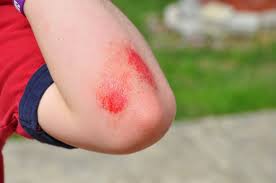
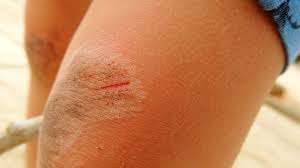
| Cat 2 | Report on Medical Tracker | All head/face injuries Large grazes Any injury caused by another child ie bite, scratch that breaks the skin Any graze that you are unable to remove the grit from Stings with a mild reaction Splinters |
| Cat 3 | No need to report | No visible mark and the child seems their usual self minor cuts/grazes minor bumps to any part of the body other than the head that leave no mark |
This page was last updated on 18.03.24
Below you will find information about 1) the rise in cases of scarlett fever and 2) Covid-19 information.
This guidance refers to public health exclusions to indicate the time period an individual should not attend a setting to reduce the risk of transmission during the infectious stage. This is different to ‘exclusion’ as used in an educational sense.
Measles
Click on the link to find out more: Measles – NHS (www.nhs.uk)
Scabies
Click on the link to find out more: Scabies – NHS (www.nhs.uk)
Whooping Cough
Click on the link to find out more: Whooping cough – NHS (www.nhs.uk)
Increase in Scarlet Fever
There is a recent national increase in notifications of scarlet fever to the UK Health Security Agency (UKHSA), above seasonal expected levels.
We would like to take this opportunity to remind you of the signs, symptoms and the actions to be taken if you think that you or your child might have scarlet fever.
Signs and symptoms of scarlet fever
Scarlet fever is a common childhood infection caused by Streptococcus pyogenes, or group A Streptococcus (GAS). It is not usually serious, but should be treated with antibiotics to reduce the risk of complications (such as pneumonia) and spread to others. The early symptoms of scarlet fever include sore throat, headache, fever, nausea and vomiting. After 12 to 48 hours, the characteristic red, pinhead rash develops, typically first appearing on the chest and stomach, then rapidly spreading to other parts of the body, and giving the skin a sandpaper-like texture. The scarlet rash may be harder to spot on darker skin, although the ‘sandpaper’ feel should be present. Patients typically have flushed cheeks and be pale around the mouth. This may be accompanied by a bright red red ‘strawberry’ tongue.
If you think you, or your child, might have scarlet fever:
- contact your GP or NHS 111 as soon as possible
- make sure that you or your child take(s) the full course of any antibiotics prescribed. Although you or your child will feel better soon after starting the course of antibiotics, you must complete the course to ensure that you do not carry the bacteria in your throat after you have recovered
- stay at home, away from nursery, school or work for at least 24 hours after starting the antibiotic treatment, to avoid spreading the infection
You can help stop the spread of infection through frequent hand washing and by not sharing eating utensils, clothes, bedding and towels. All contaminated tissues should be disposed of immediately.
Invasive Group A Strep (iGAS)
The same bacteria which cause scarlet fever can also cause a range of other types of infection such as skin infections (impetigo) and sore throat. In very rare cases, the bacteria can get into the bloodstream and cause an illness called invasive group A strep (iGAS). Whilst still very uncommon, there has been an increase in iGAS cases this year, particularly in children under 10 years old. It is very rare for children with scarlet fever to develop iGAS infection.
As a parent, you should trust your own judgement.
Contact NHS 111 or your GP if:
- your child is getting worse
- your child is feeding or eating much less than normal
- your child has had a dry nappy for 12 hours or more or shows other signs of dehydration
- your baby is under 3 months and has a temperature of 38C, or is older than 3 months and has a temperature of 39C or higher
- your baby feels hotter than usual when you touch their back or chest, or feels sweaty
- your child is very tired or irritable
Call 999 or go to A&E if:
- your child is having difficulty breathing – you may notice grunting noises or their tummy sucking under their ribs
- there are pauses when your child breathes
- your child’s skin, tongue or lips are blue
- your child is floppy and will not wake up or stay awake
Stop the spread
During periods of high incidence of scarlet fever, there may also be an increase in outbreaks in schools, nurseries and other childcare settings. Children and adults with suspected scarlet fever should stay off nursery / school / work until 24 hours after the start of appropriate antibiotic treatment. Good hygiene practice such as hand washing remains the most important step in preventing and controlling spread of infection.
Yours sincerely,
East Midlands Health Protection Team
Respiratory infections including coronavirus (COVID-19)
Exclusion Period – Individuals should not attend if they have a high temperature and are unwell.
Individuals who have a positive test result for COVID-19 should not attend the setting for 3 days after the day of the test.
Living safely with respiratory infections, including COVID-19
On this page you will find the latest up to date information about Living safely with respiratory infections, including COVID-19. If you need to contact school during the school day or outside of school hours, the school email address is office@roundhill.notts.sch.uk During office hours the school telephone number is 0115 9179262. (Teachers have been told not to respond to ClassDojos out of school hours.)
Living with Covid-19 – Updated DfE and LA Guidance
Thank you for your support and patience as we have worked together to overcome the many challenges the pandemic has thrown at us.
Current national guidance states that it is not recommended that children and young people are tested for COVID-19 unless directed to by a health professional.
If your child has Covid-19 symptoms and is unwell and has a high temperature please keep them at home and avoid contact with other people. They can return to school when they no longer have a high temperature and feel well enough to be at school.
If you have chosen to test your child and they have a positive COVID-19 test result, they should try to stay at home and avoid contact with other people for 3 days after the day they took the test, if they can. After 3 days, if they feel well and do not have a high temperature, the risk of passing the infection on to others is much lower. This is because children and young people tend to be infectious to other people for less time than adults.
The Government have also released guidance on Covid-19 vaccination information for parents/carers of children aged 5 to 11 years. The latest information can be found by clicking here.
Control Measures
In the guidance for schools, we will still be implementing the ‘standard’ measures of enhanced cleaning, good hand hygiene practice, and good ventilation. Staggered start and end times or have always been a feature of our large site and will remain as before. All measures have been risk assessed and will be reviewed regularly.
No Facemasks for Children
Apart from some pre agreed exceptions, as we have mentioned previously, children will not be allowed to wear masks in school. If children do wear one on the way to school, they should know how to safely take it off and have a sealed bag with them to keep it safe or throw it in a tissue bin in school. They should wash their hands immediately after they have taken off their face mask.
Change in Circumstances
If you feel that due to a change in personal circumstances that your family is now entitled to free school meals then please follow this link for further information https://www.gov.uk/apply-free-school-meals.